Search This Blog

Showing posts with label yeast bread. Show all posts

Sunday, January 23, 2022

Cinnamon Star Coffee Cake/Challah (or Pesto Star)

This is a King Arthur recipe - It's a lot of steps but fun. I baked one with Shula and Amira for our New Years Eve 2022/Shabbat Dinner. Obviously dairy. In this case the filling ran a bit, so a better seal matters. There are lots of videos to review the cut/twist steps.

The dough would be easy to double. It's such an impressive bread.
To do a six-pointed star, assumedly you can cut each quarter into thirds, and have six points instead of eight.

Dough

2 c (240g) Flour
1/2 cup (46g) dried potato flakes
1/4 cup (28g) nonfat dry milk powder
3/4 cup + 2 to 4 tablespoons (198g to 227g) lukewarm water, enough to make a soft, smooth dough
4 T (57g) unsalted butter, at room temperature
1 t vanilla extract (omit if you're baking a savory star, like with pesto)
2 t instant yeast
2 T (25g) granulated sugar (cut to 1 T. for Savory Star)
1 t (6g) salt

Filling
1 large egg, beaten
1/2 c (99g) granulated sugar
1 T cinnamon
    or
Pesto (1/2 cup)

Combine all of the dough ingredients and mix and knead — by hand, mixer, or bread machine — to make a soft, smooth dough. It is a rich dough and doesn't need a lot of working. Starting with a mixer and finishing by hand, in the bowl, seems to work fine.

Place the dough in a lightly greased bowl, cover, and let it rise for 60 minutes, until it's nearly doubled in bulk.

To shape the loaf: Divide the dough into four equal pieces. Shape each piece into a ball, cover the balls, and allow them to rest for 15 minutes.

On a lightly greased or floured work surface, roll one piece of dough into a 10" circle. Place the circle on a piece of parchment, brush a thin coat of beaten egg on the surface, then evenly sprinkle with 1/3 of the cinnamon sugar (or pesto), leaving 1/4" of bare dough around the perimeter.

Roll out a second circle the same size as the first, and place it on top of the filling-covered circle. Repeat the layering process — egg, cinnamon sugar, dough circle — leaving the top circle bare. [Pinch the perimeter so the filling doesn't burst out as much.]

Place a 2 1/2" to 3" round cutter in the center of the dough circle as a guide. With a sharp knife, cut the circle into 16 equal strips, from the cutter to the edge, through all the layers.

Using two hands, pick up two adjacent strips, pull up & out and twist them away from each other twice so that the top side is facing up again. Repeat with the remaining strips of dough so that you end up with eight pairs of strips.

Pinch the pairs of strips together to create a star-like shape with eight points.

Transfer the star on the parchment to a baking sheet. Cover the star and let it rise until it becomes noticeably puffy, about 45 minutes.


While the star is rising, preheat the oven to 400°F.


Brush the star with a thin coat of the beaten egg. Bake it for 12 to 15 minutes, until it's nicely golden with dark brown cinnamon streaks; the center should register 200°F on a digital thermometer.


Remove the loaf from the oven and allow it to cool for about 10 minutes before serving. Dust with confectioners' sugar and serve warm or at room temperature.

Saturday, October 10, 2020

Jessica Fechtor's Five-Fold Challah


I learned of Jessica Fechtor's challah while watching the video about the King Arthur Cheesey Pan Pizza. I have made this challah quite a few times during COVID, making slight modifications.

A fabulous challah recipe from Jessica Fechtor’s “Stir: My Broken Brain and the Meals That Brought Me Home,

The recipe calls for instant dry yeast rather than active dry yeast (which requires proofing). Fechtor recommends SAF-Instant yeast or Fleischmann’s BreadMachine or Rapid-Rise Yeast.

Makes 3 small loaves

Dry ingredients:
3 c (500 grams) bread flour or all-purpose flour
1 c. whole wheat flour
1 ½ t instant dry yeast (I have used regular and it worked fine)
2 t salt

Wet ingredients:
2 large eggs plus 1 large egg yolk (save the extra white in a covered glass in the fridge for glazing later on)

¾ cup (190 grams) water
1/3 cup (75 grams) olive oil
¼ cup (85 grams) honey

1/4 c raisins, optional

1) Whisk together the dry ingredients in a large bowl, and the wet ingredients in a smaller bowl. Dump the wet ingredients into the dry ingredients and stir with a rubber spatula until a wet, sticky dough forms. Cover the bowl with plastic and let sit for 10 minutes.

2) Peel back the plastic. Grab an edge of the dough, lift it up, and fold it over itself to the center. Turn the bowl a bit and repeat around the entire lump of dough, grabbing an edge and folding it into the center, eight turns, grabs and folds in all. Then flop the dough so that the folds and seams ore on the bottom. Cover tightly again with the plastic, and let sit for 30 minutes. (That is Fold 1).

3) Repeat the all-around folding, flipping, covering and resting for 30 minutes four more times. (I keep track by using four bottle caps.) The dough flops more than it folds in the first round or two. Then, as the gluten develops, you’ll get proper folds. By the final fold, the dough will be wonderfully elastic, and you’ll be able to see and feel the small pockets of air within. Pull the plastic tight again over the bowl and refrigerate for 16 to 24 hours.

4) Cover 2 baking sheets with parchment paper and set aside. Transfer the dough to a lightly floured surface and divide into 9 equal pieces. (This is time-consuming.) 
Roll into 9 strands, adding raisins if you wish. (You’ll want to add as little extra flour as possible.) 
Braid from the center, pulling the strands and keeping the braid tight in both directions. Transfer the loaves to the prepared pan. Cover with plastic and let proof at room temperature for 2 to 3 hours, until the dough is noticeably swollen and puffed and bounces back, very slowly, if at all, when you poke it lightly with your finger.

5) Preheat the oven to 375˚ F.

6) Remove the plastic from the loaves and brush with the reserved egg white. 

7) Bake for about 20 to 25 minutes, until the bread is golden and gorgeous.

Thursday, June 18, 2020

King Arthur 2020 Recipe of the Year: Pan Pizza


Crust
2 c flour (use 1/4 whole wheat flour)
3/4 t salt
½ instant yeast or active dry yeast
3/4 cup (170g) lukewarm water
1 T olive oil + 1½ T  olive oil for the pan

Topping
6 ounces  mozzarella, grated (about 1 1/4 c, loosely packed)*- can be low-fat
1/3 to ½ c tomato sauce or pizza sauce, homemade or store-bought
toppings to put on after about 10 minutes: sliced olives, sliced peppers, onions, and/or mushrooms if you like
Optional: freshly grated hard cheese and fresh herbs for sprinkling on top after baking.

Spray a large bowl with oil. Weigh your flour; or measure it by gently spooning it into a cup, then sweeping off any excess. Place the flour, salt, yeast, water, and 1 T of the olive oil in the bowl.

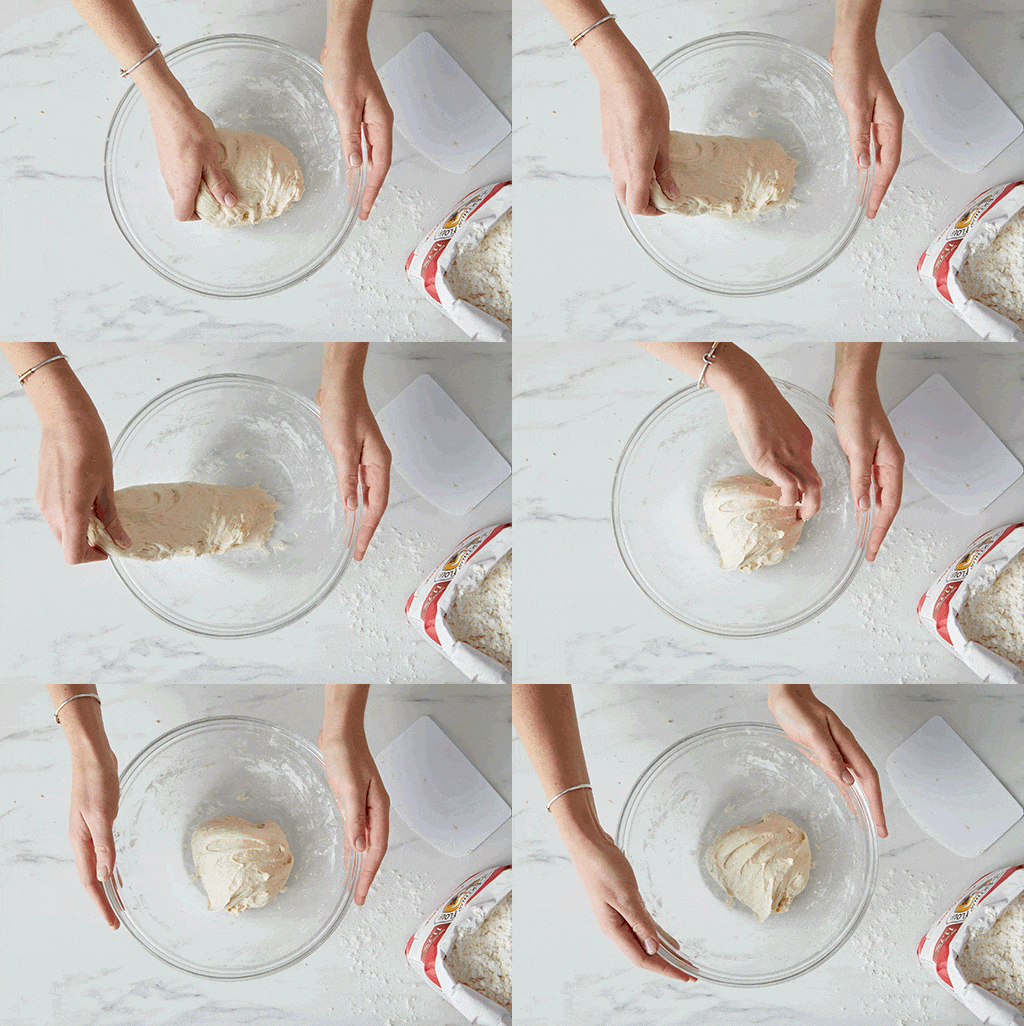
Stir everything together to make a shaggy, sticky mass of dough with no dry patches of flour. This should take about 1 minute by hand, using a spoon or spatula. Scrape down the sides of the bowl to gather the dough into a rough ball; cover the bowl.

After 5 minutes, uncover the bowl and reach a bowl scraper or your wet hand down between the side of the bowl and the dough, as though you were going to lift the dough out. Instead of lifting, stretch the bottom of the dough up and over its top. Repeat three more times, turning the bowl 90° each time. This process of four stretches, which takes the place of kneading, is called a fold. 

To keep track put four of something next to the dough bowl (like bottle caps), and move one over each time.  


Re-cover the bowl, and after 5 minutes wet your hands and do another fold. Wait 5 minutes and repeat; then another 5 minutes, and do a fourth and final fold. Cover the bowl and let the dough rest, undisturbed, for 40 minutes. Then refrigerate it for a minimum of 12 hours, or up to 72 hours. It'll rise slowly as it chills, developing flavor; this long rise will also add flexibility to your schedule.

About 2-3 hours before you want to serve your pizza, prepare your pan. Pour 1 ½ tablespoons (18g) olive oil into a well-seasoned cast iron skillet that’s 10” to 11” diameter across the top, and about 9” across the bottom. Spread it up the sides to the top, as the dough will rise during baking. Heavy, dark cast iron will give you a superb crust.

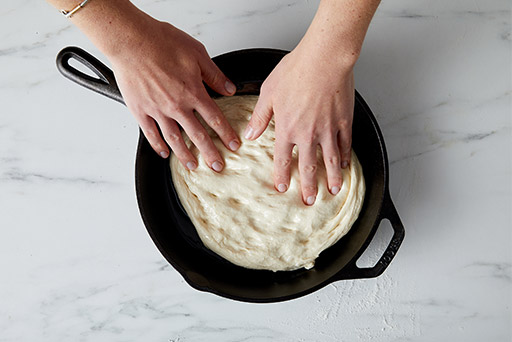
Transfer the dough to the pan and turn it once to coat both sides with the oil. After coating the dough in oil, press the dough to the edges of the pan, dimpling it using the tips of your fingers in the process. The dough may start to resist and shrink back; that’s OK, just cover it and let it rest for about 15 minutes, then repeat the dimpling/pressing. At this point the dough should reach the edges of the pan; if it doesn’t, give it one more 15-minute rest before dimpling/pressing a third and final time.


Cover the crust and let it rise for 2 hours at room temperature. The fully risen dough will look soft and pillowy and will jiggle when you gently shake the pan.

[About 30 minutes before baking, place one rack at the bottom of the oven and one toward the top (about 4" to 5" from the top heating element).] Preheat the Breville oven to 435°F - it heats up in 2-3 minutes. (when baked at 450, it takes only 12 minutes. This might slow it down a little.) 

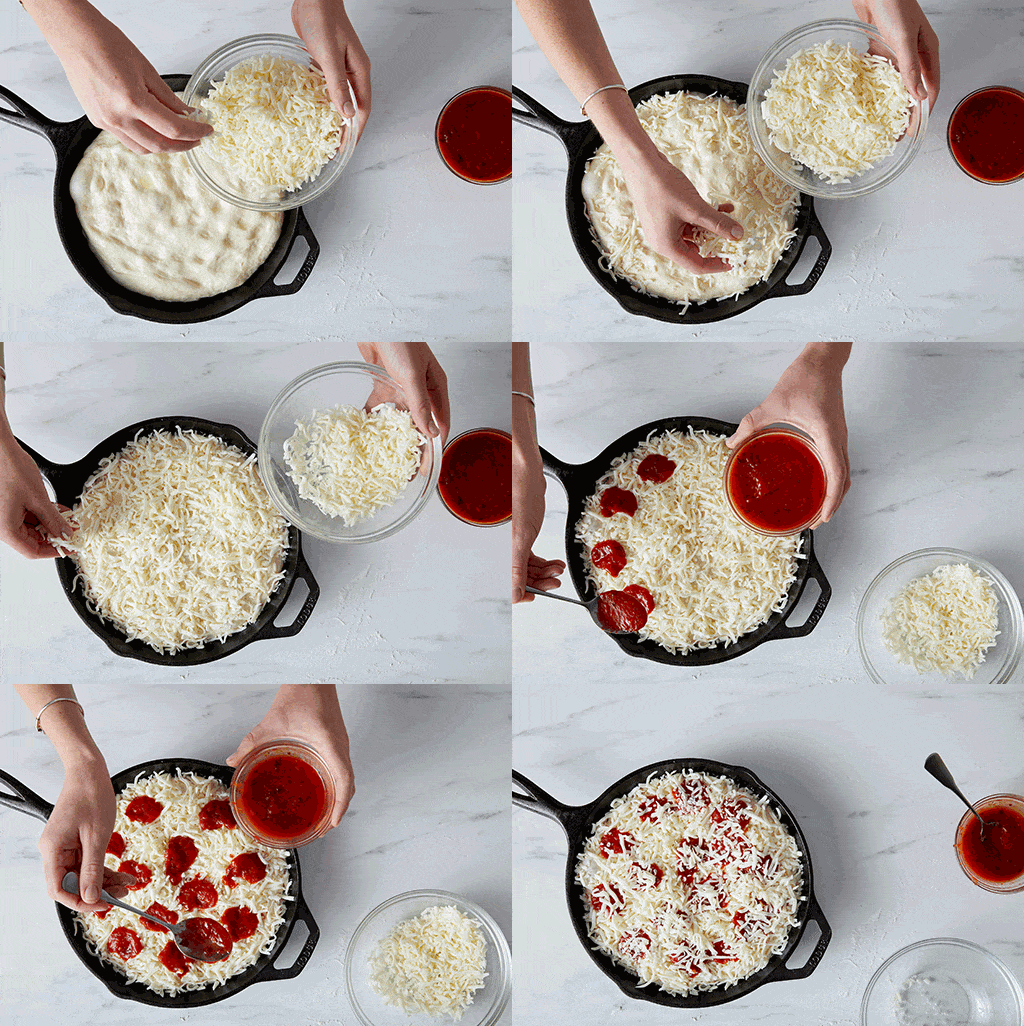
When you’re ready to bake the pizza, sprinkle about three-quarters of the mozzarella (a scant 1 cup) evenly over the crust. Cover the entire crust, no bare dough showing; this will yield caramelized edges. Dollop small spoonfuls of the sauce over the cheese; laying the cheese down first like this will prevent the sauce from seeping into the crust and making it soggy. Sprinkle on the remaining mozzarella.


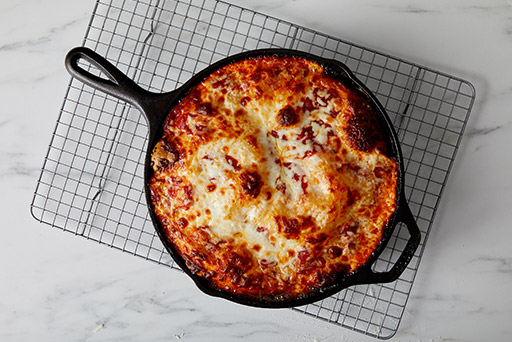
In the Breville it was done and very browned in 15 minutes! If you want to add vegetable toppings, try adding them at about 10 minutes. Rotate halfway through.

Remove the pizza from the oven and place the pan on a heatproof surface. Carefully run a table knife or spatula between the edge of the pizza and side of the pan to prevent the cheese from sticking as it cools. Let the pizza cool very briefly; as soon as you feel comfortable doing so, carefully transfer it from the pan to a cooling rack or cutting surface. This will prevent the crust from becoming soggy.


Serve the pizza anywhere from medium-hot to warm. Kitchen shears or a large pair of household scissors are both good tools for cutting this thick pizza into wedges.

A chopped can of anchovies is a good addition.

Thursday, April 30, 2020

Jane Brody Bran Pretzel Rolls


I baked these when you were little. They aren't exactly no-knead, but you knead the dough in the bowl so they're a bit easier than many yeast doughs.
They have both whole-grain cereal and whole wheat, making them very fiber rich.

Jane Brody is still, in 2021, at age 80 a NYTimes Science/Healthy columnist, so she has been a guide my whole adult life. In the 80s she had a PBS cooking show I watched occasionally, and I have two of her cookbooks. They aren't fancy, but the recipes are good and things you'd really make, with healthy ingredients.

These are prettier with an egg wash glaze and sesame seeds. I baked them during the 2020 CoronaQuarantine, when I was craving yeasty rolls.
I just baked some for Eyal and Nadav's first days at the ECP.
They are satisfying and just a little sweet - what I enjoy for breakfast.

Four addenda:
1) No need to refrigerate the dough. Today, with a room temperature of 66 or so, I rolled the pretzels out after the first rise with room temperature dough, much easier. I shaped them and left the tins out for about 3-4 hours at room temperature and they were fine. Eyal, Nadav and I egg-washed and sprinkled them.
2) If you do refrigerate the dough, let it come to room temperature before rolling out. The cold dough is very hard to work with.
Roll it into an oblong, and cut it into 24 long lengths. This saves a lot of time!
3) To make the pretzel shape, curve 12" strands and curve them, crossing each other, and attach. Take the two endsand press both end into the edge. A fancier version: twist before attaching.
The thinner and longer you roll the dough, the more defined the pretzel shape is.

4) Egg wash before the rise. Rewash and sprinkle with sesame seeds for a prettier roll.


After the 2 hour rising. 


Saturday, December 19, 2015

Yeast Coffee Ring

This was a Fargo favorite - Aunt Ruth made it, using Dorothy Goodman and Jay Siegel's recipe. This recipe is a very flexible dough which can be shaped and rolled out, twisted, braided + more, and does not require kneading. Note it is made a day ahead and refrigerated. I have rewritten the recipe in a more step-by-step format with ALL the ingredients at the beginning. For the filling, you can be creative - softened cream cheese, jams, poppy seed or almond filling, chocolate chips-- most anything works fine.


2 c. luke warm milk (not boiled)

1 fresh cake yeast (= 2 ¼ teaspoons dry yeast)

1 T. sugar (for yeast mixture)
-------------------------------------------------------------
6 c. flour

1 t. salt

3 T. sugar

½ lb. butter

4 beaten eggs

1 t. vanilla
-------------------------------------------------------------------------------

butter (for spreading on rolled out dough, next day)

brown sugar

cinnamon

raisins

(nuts, mini-chocolate chips, jam - anything else! - optional)

---------------------------------------------------------------
Confectioners sugar

lemon or amond extract

milk

1. In a mixing bowl, combine warm milk, 1 fresh yeast cake ans 1 T sugar until dissolved. Set aside for 10 minutes to proof.
2. While waiting, sift into large mixing bowl (or mix-master) the 6 cups of flour, 1 t. salt, and 3 T. sugar.
3. Cut in the two sticks of butter. Beat until incorporated.
4. Back to the yeast mixture: Add 4 beaten eggs and 1 t. vanilla
5. Mix into the flour mixture. Beat until smooth.
6. Cover (with a shower cap!) and refrigerate OVERNIGHT.

Good morning. The dough will be a little soft. Add flour to the board (or counter) and knead the dough, adding flour as needed, until it is not too sticky to work with.

1. Divide into 4 equal portions.
2. Roll thin into a rectangle (approx 9 x 18) which will become a jellyroll.
3. Shmear with all the filling. You can either cover the whole surface or just one end, running the long way.
4. Roll tight.
5. On a greased tin, make it into a crescent or circle. Lots of fancy things you can do w cuts and twists. This version is cut and twisted, alternating in and out.

6. Cover with a towel or plastic and let it rise for 3 hours! Another version is to heat the oven to just 100 or so, turn it off, and put the cakes in. Not sure they really need covering.
7. Bake at 350 for 30-35 minutes. Let cool.
8. Mix the confectioners sugar, milk (tiny amount!), and extract and frost your cakes.

You could sprinkle them with slivered almonds, too, if this isn't already yummy enough.